
The opera star, the ‘castle’ and the hill: 7 stories from Grossmont’s early days

Before La Mesa became official, there was the neighborhood of Grossmont.
It’s hard to imagine the area without busy roads, shopping centers, schools and medical offices. But before the traffic, there were citrus trees, country roads, big dreams — and a hill that gave the community its name.
The East County of the early 20th century was a very different place. Its story includes a theatrical agent, an internationally famous opera singer, an ambitious developer, a granite “Castle” and a community determined to build its own hospital.
Here are seven chapters from La Mesa’s early days that might make you look at the community a little differently.
1. The ‘gross’ in Grossmont was a real person
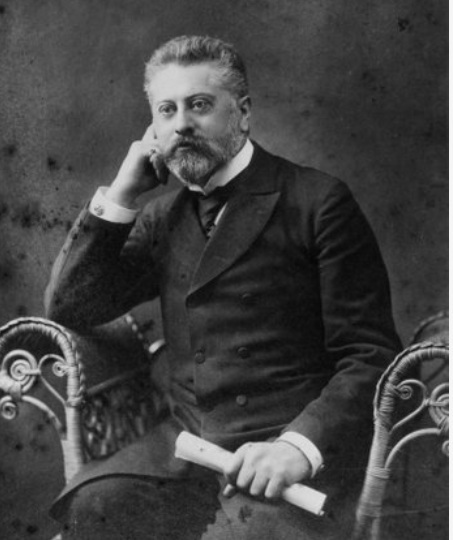
Grossmont wasn’t named because somebody thought the mountain was particularly, well, gross. The “Gross” was William B. Gross, a Pennsylvania-born theatrical agent, actor, and “lifelong bachelor” who came to San Diego and became friends with Ed Fletcher.
The two men met in Yellowstone National Park in 1901. A ride together in a six-horse tallyho helped solidify their friendship.
Back in San Diego, their friendship turned into a business partnership. In 1902, Fletcher and Gross purchased the Villa Caro Ranch, a property that included citrus trees, a Victorian home and surrounding acreage.
Fletcher eventually named the prominent hill Grossmont in honor of his partner — and that name stuck.
2. Grossmont had an artists’ colony in the making
This may be one of the biggest surprises in its history.
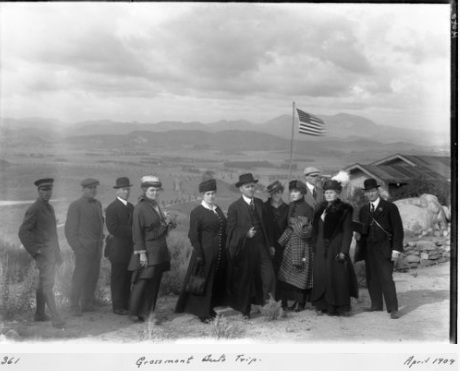
Fletcher and Gross envisioned their hilltop development as a place that could attract artists, musicians, writers and performers, with Gross’s theatrical connections helping draw people from the arts.
Fletcher filed a subdivision map in 1910 naming the area Grossmont Park.
The San Diego History Center describes the resulting development as the Grossmont Art Colony. It wasn’t a formal artists’ colony in the modern sense, but the idea attracted some impressive residents and gave Grossmont a distinctly artistic reputation in its early years.
3. Grossmont had an inn — with white-gloved servants
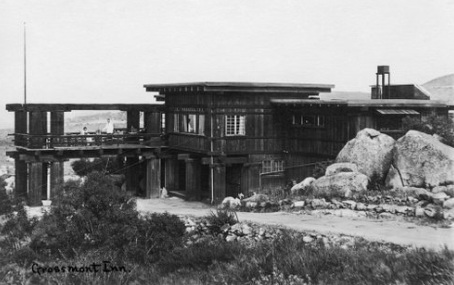
Before shopping centers and medical complexes, Grossmont had the Grossmont Inn.
Built by Fletcher in 1913 at 9680 Evans Place, the inn began as a commercial venture. Guests arriving by stagecoach from the train depot in El Cajon were greeted by white-gloved servants, while a French chef brought from New York prepared the meals.
Wide porches looked over the countryside below.
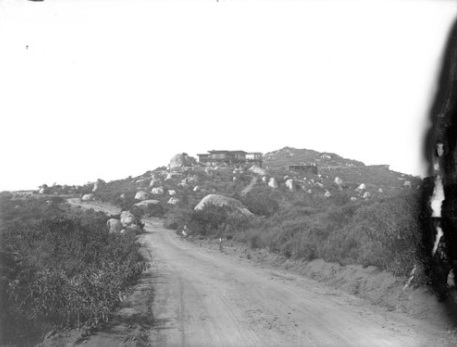
View is looking west to San Diego. (Photo and caption info courtesy of the San Diego History Center)
The inn eventually became the Fletcher family residence, but in its early days it was also part of Fletcher’s effort to show visitors what life in his hilltop community could be like.
Imagine trying to sell Grossmont today with that view — and no traffic.
4. An opera superstar was one of Grossmont’s early residents

Grossmont’s artistic ambitions attracted some serious star power.
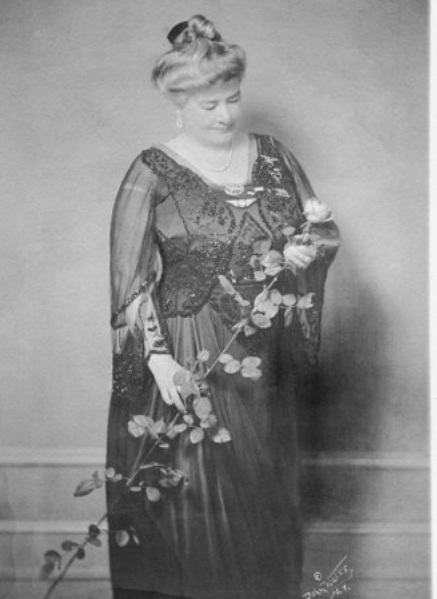
Ernestine Schumann-Heink, the internationally famous opera contralto, arrived in San Diego in 1910 to perform at the Garrick Theater. She decided to make San Diego her home and purchased property in Grossmont.

Flowers on the top of the desk have a ribbon that reads: To Henry from Mother. Schumann-Heink had been a contralto opera singer at the Metropolitan Opera in New York. (Photo and caption info courtesy of the San Diego History Center)
Her house, completed in 1913, became one of the early homes in the artists’ colony being developed by Fletcher and Gross.

Other figures associated with the colony included songwriter Carrie Jacobs Bond, composer Charles Wakefield Cadman and authors Owen Wister and John Vance Cheney.
Schumann-Heink later sold her Grossmont house and made her primary home in Coronado, but her connection to the area remains one of the community’s most colorful historical footnotes.
5. Grossmont High School’s ‘Castle’ has Fletcher’s fingerprints all over it
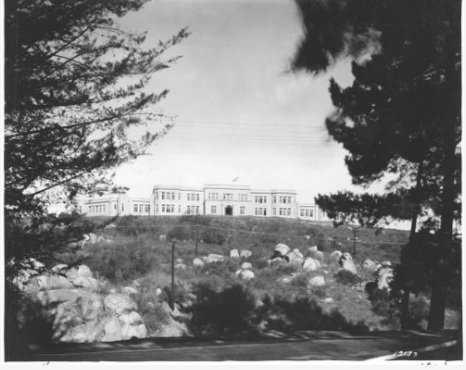
The imposing Grossmont High School “Castle” isn’t just an old-looking school. It is a genuine survivor from Grossmont’s formative years.
In 1920, Ed Fletcher (as in “Fletcher Hills“) donated most of the land for the school for a $10 fee, while James and Mary Murray (as in “Lake Murray“) donated additional lots.
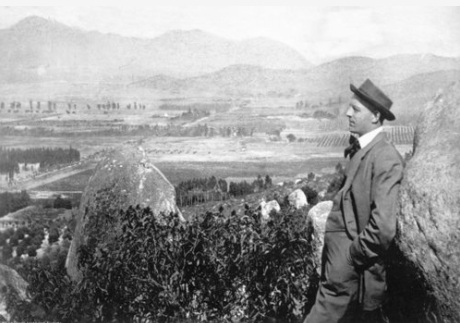
Students first attended classes in the new building on Sept. 25, 1922. The building was completed in January 1923.
And here’s one of the best details: the distinctive granite exterior came from Fletcher’s nearby granite quarry.
The original building served as a school until 2006 and later became the Grossmont Union High School District’s administrative headquarters. It was renovated while retaining much of its historic character.
So that “Castle” isn’t simply an architectural curiosity. It is literally built into the story of the man who helped develop Grossmont.
6. Grossmont Hospital took a community army to build
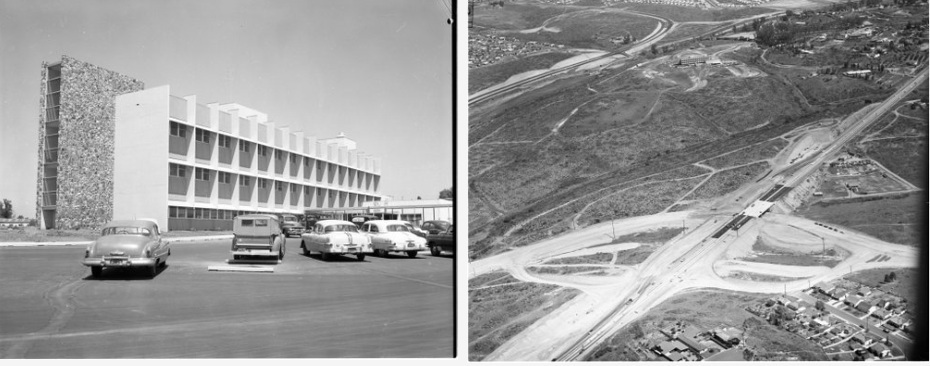
The idea of a hospital serving East County goes back to the 1920s, but it took decades — and a determined group of residents — to make it happen.
In 1952, East County voters approved creation of the Grossmont Hospital District. The campaign was a genuine community effort. Volunteers staffed more than 40 polling places, and transportation and babysitting were offered to help residents vote.
The hospital opened in August 1955.
Its first patient was Randy George Callas, an eight-pound, three-ounce baby born just 30 minutes before opening day.
On that first day, the hospital recorded 24 admissions, including four surgeries and five births.
That’s one way to make an entrance.
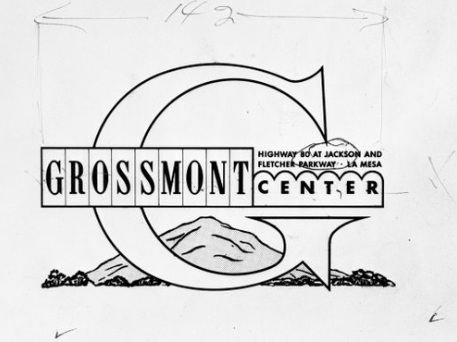
7. Grossmont Center opened to a crowd bigger than La Mesa

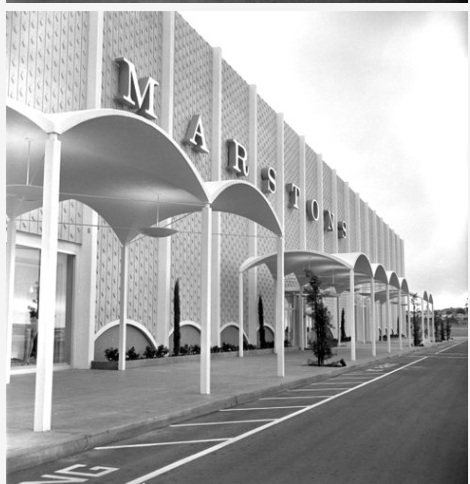
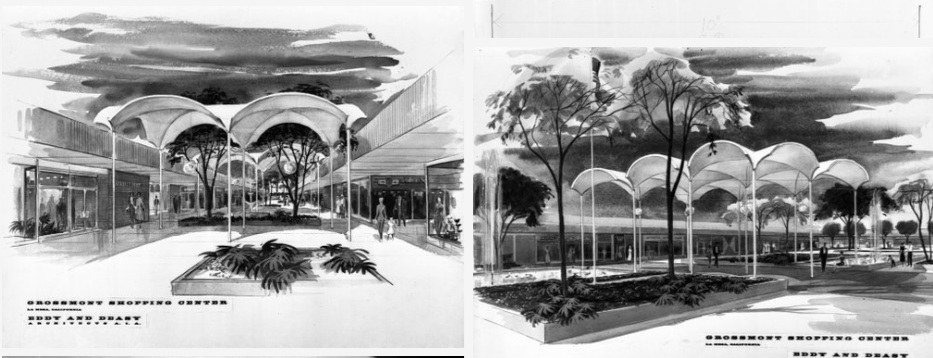

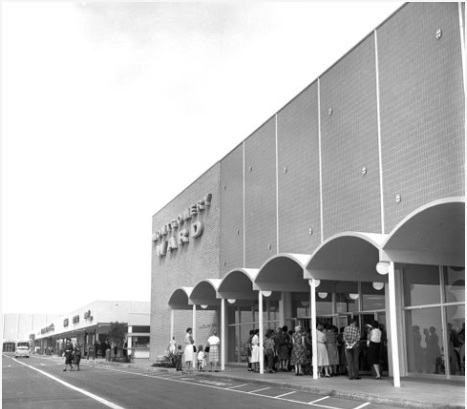
When Grossmont Center opened Oct. 5, 1961, it wasn’t simply a new place to shop. It was a major event for the entire region.
The 110-acre center was the third regional shopping mall in San Diego County and represented an investment of about $20 million.
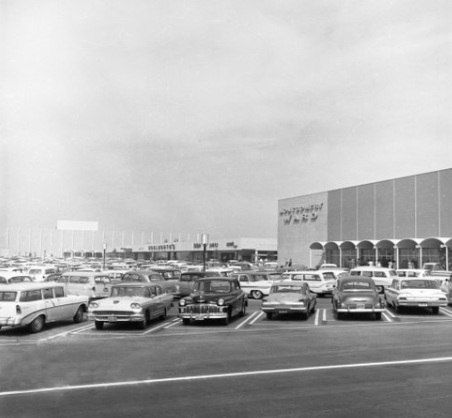
Opening day drew approximately 50,000 people — roughly 20,000 more people than La Mesa’s population at the time.
The arrival of Grossmont Center helped cement the area as a regional commercial destination and marked another major step away from the rural landscape of Fletcher’s early Grossmont.
The hilltop artists’ colony was long gone. The suburban age had arrived.
Before the traffic
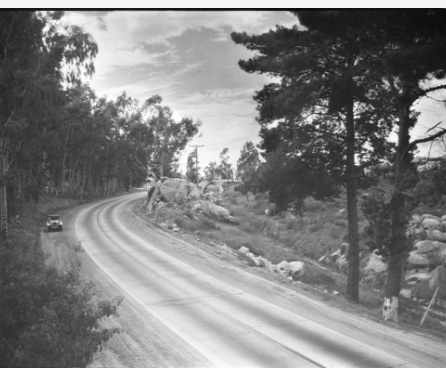
Trees are growing on both sides of the highway, which is empty except for the parked car.
The railroad tracks are seen below the highway on the right. (Photo and caption info courtesy of the San Diego History Center)
Grossmont’s history is really a story of transformation.
A theatrical agent’s name became part of the local landscape. A real-estate development attracted artists and performers. An opera star built a home on the hill. A granite schoolhouse became a landmark. Residents fought for their own hospital. And then a huge shopping center helped usher the area into the suburban age.
So the next time you’re inching along La Mesa’s busy roads, consider what you’re driving through.
Before the traffic, there was a very different East County — one built on hills, ambition, artistry and a cast of characters worthy of a movie.
Read more history stories here.
Sources:
San Diego History Center: Summer Furzer, “God’s Garden,” The Journal of San Diego History, Fall 1985; San Diego History Center materials on Ernestine Schumann-Heink and the Grossmont Art Colony.
La Mesa History Center: Historical information on Grossmont, Ed Fletcher, William Gross and the 1961 opening of Grossmont Center.
Grossmont High School Museum: History of the 1922 “Castle,” Ed Fletcher’s land donation and the granite from his quarry.
Grossmont Healthcare District: History of the Grossmont Hospital District and the opening of Grossmont Hospital in 1955.
Categories
Recent Posts






GET MORE INFORMATION
